
Thinking of selling online? Here’s what an e-commerce website really costs in India in 2026, what’s included, the running costs to plan for and how to avoid overspending.
More customers in India now buy online, even in smaller cities. If you sell clothes, groceries, medicines, handicrafts or spare parts, an online store lets you take orders day and night, beyond your local area. The first question is usually: how much will it cost?
This guide explains typical e-commerce website prices in India in 2026, what affects them and the ongoing costs many people forget.
Typical prices for an online store
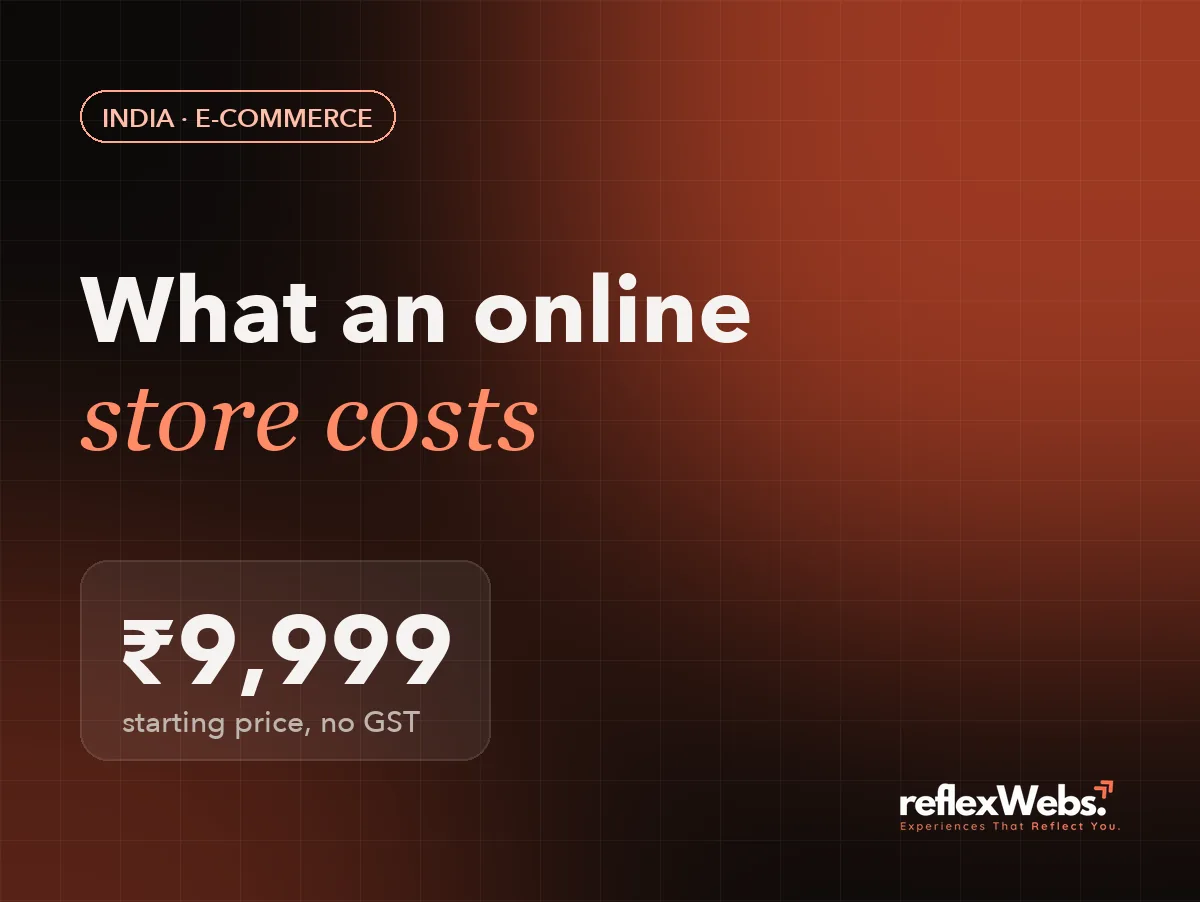
- Simple online store, from about ₹10,000: a ready-made design set up for your brand, up to around 50 products, UPI and card payments, shipping settings and order emails. Our own E-commerce Store plan starts at ₹9,999, with no GST added.
- Custom-designed store, roughly ₹30,000 to ₹1,00,000: a unique design, hundreds of products, advanced filters, customer accounts, coupons and integrations with courier or accounting tools.
- Marketplace or multi-vendor platform, ₹1,50,000 and up: several sellers, commissions, vendor dashboards and custom features.
Most small businesses should start simple and add features once orders come in.
What drives the price up
- Number of products, and how much work it takes to add photos, descriptions and variants such as sizes and colours.
- Custom design rather than a template.
- Integrations with couriers, inventory software, accounting tools or WhatsApp notifications.
- Special features like subscriptions, bookings, wholesale pricing or multiple languages.
Running costs to budget for
- Domain name and hosting, renewed every year.
- Payment gateway fees, usually a small percentage of each transaction. Compare Razorpay, PayU, Cashfree and others.
- Shipping, through couriers or aggregators.
- Maintenance, such as updates, backups and security, which matter more when you handle payments.
- Marketing, because a store needs visitors. Plan for Google, Instagram or WhatsApp promotion.
Your own store vs selling on marketplaces
Amazon and Flipkart bring traffic but charge commissions and control the customer relationship. Your own store takes more effort to promote, but you keep more of each sale, own your customer data and build your brand. Many businesses do both.
Features every store should have
- Fast, mobile-friendly pages, because most shoppers buy on their phones.
- UPI, cards, net banking and, if you want, cash on delivery.
- Clear shipping, return and refund policies.
- Good product photos and honest descriptions.
- A WhatsApp button for quick questions before purchase.
Start your online store
We build e-commerce stores for businesses across India, like the store we built for Buoyant Pharma. See our pricing, or ask for a free quote.